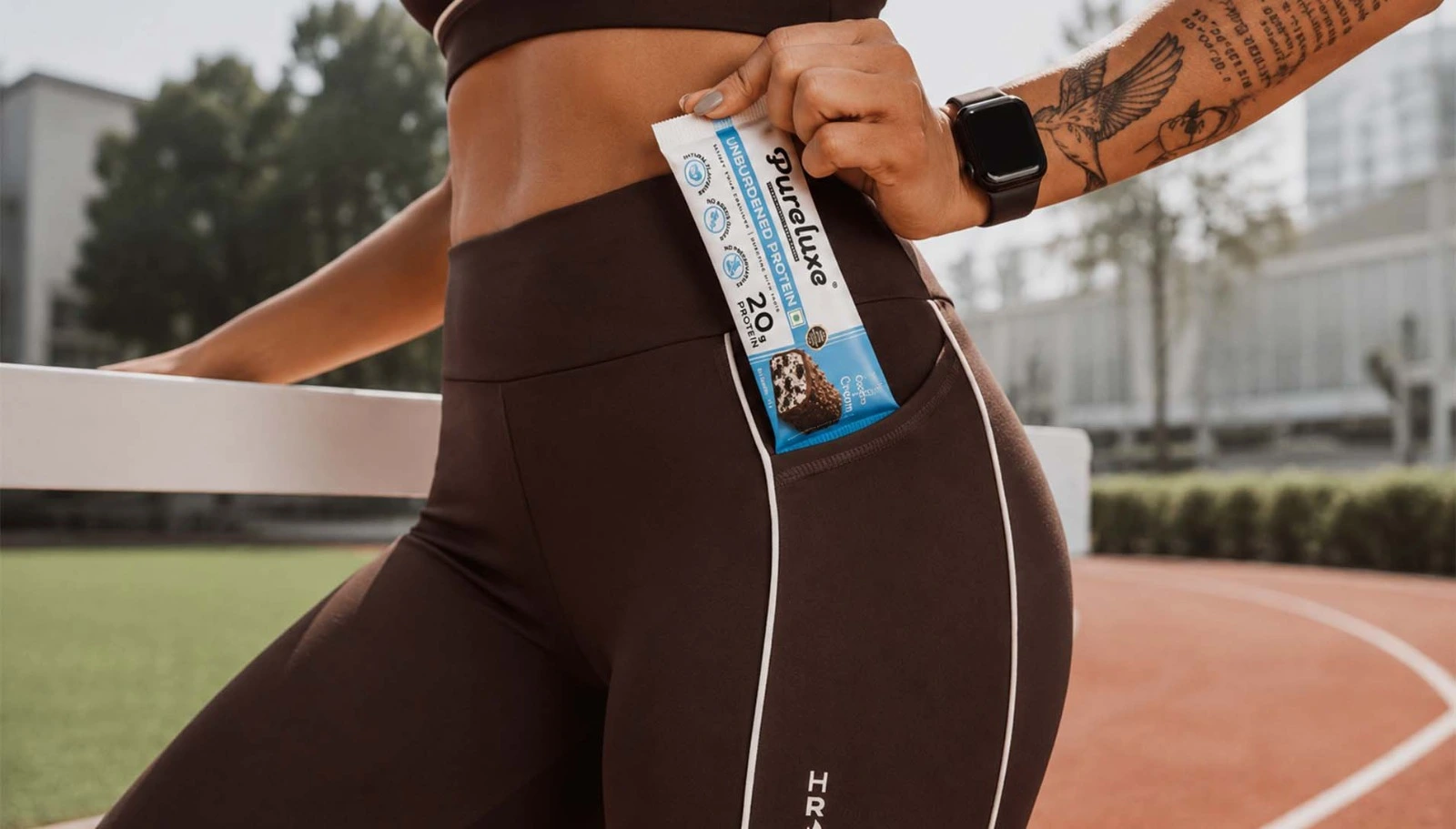
What's Behind the Rise of Protein Bars?
Before getting into the brands themselves, it's worth understanding what's actually fuelling this growth.
Consumers are increasingly becoming conscious of what they eat. They want something that helps them fulfil their nutrition goals without the hassle of cooking. Protein bars fit perfectly into this space.
Busy work schedules, plenty of travelling and loads of responsibilities. Sometimes, it's just difficult to enjoy a nourishing meal. Protein bars are a convenient option when time is short and enjoying a proper meal is not possible.
Chips, biscuits and sugary treats are no longer the default choice for snacking. Conscious snackers choose more nutrition-focused alternatives such as protein bars.
For fitness-focused consumers, high-protein food is essential to support their exercise routines. Protein bars give them just that.
In the era of social media, fitness influencers, athletes, and celebrities are making the product more familiar and desirable to both regular consumers and gym-goers.
Popularity means nothing if accessibility is restricted. With the rise of e-commerce and quick-commerce platforms, protein bars are easily available. They are just a few clicks away.
The Best Protein Bars in India Right Now
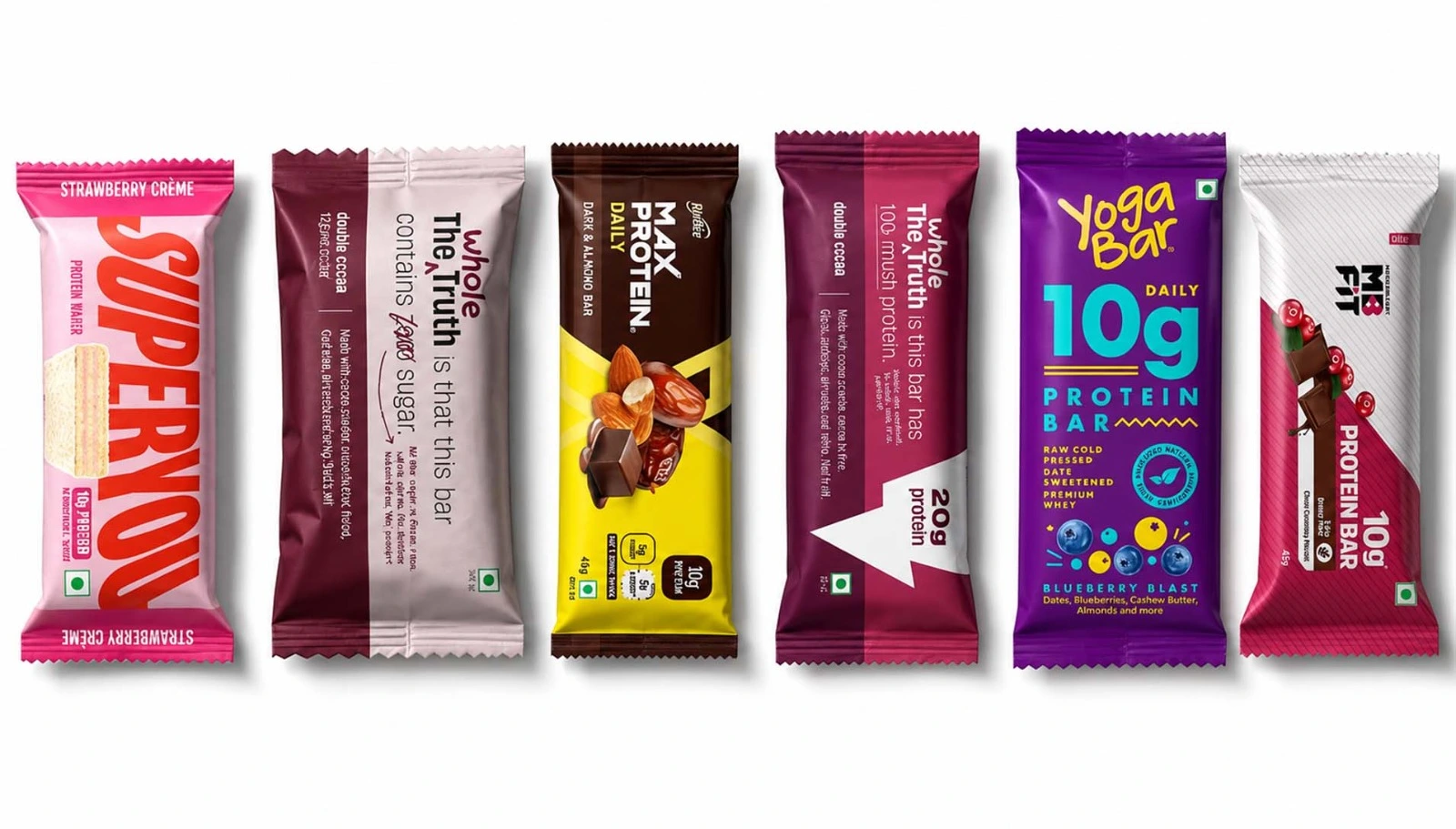
Having discussed what's fueling the growth of protein bars, let's move forward and decode the top protein bar brands in India and the reason for their success.
MuscleBlaze
Problem: Serious Indian athletes had no home-grown bar that matched what imported sports nutrition offered. They either paid import prices or settled for something weaker than what their training actually needed.
Gap: buyers wanted lab-grade protein density without the wait or the markup that came with ordering from abroad.
Audience: serious athletes, weightlifters, bodybuilders, the hardcore gym crowd who track macros closely.
Positioning: the credible, no-nonsense Indian sports nutrition brand, built for performance, not casual snacking.
Look: black, red, high-contrast packaging straight out of gym visual language, protein number as the hero graphic, because this buyer decides in half a second and wants proof, not a lifestyle shot.
USP: up to 30g protein per bar, fortified with 21 vitamins and minerals.
Result: became one of the most recognised sports nutrition brands in India and still commands shelf space in gyms and supplement stores today.
Yoga Bar
Problem: healthy snacking barely existed as its own category in India. The options were biscuits or namkeen, nothing for someone trying to eat a little cleaner without going full supplement.
Gap: people wanted a genuinely better snack, not a gym product, something to grab without a second thought.
Audience: everyday health snackers, not necessarily gym-goers.
Positioning: a healthier snack alternative that lives next to biscuits, not next to whey tubs.
Look: soft colours and lifestyle photography instead of gym cues, because it's competing for attention with a biscuit packet, not a protein shake.
USP: natural ingredients and genuinely good taste, built snack-first.
Result: acquired by ITC and now one of the most visible protein bar brands in India on general retail and quick commerce shelves.
RiteBite Max Protein
Problem: anyone curious about protein bars hits sticker shock fast. Most decent options cost more than people wanted to risk on something they hadn't tried yet.
Gap: buyers wanted a low-risk way in, a bar they could try without committing to premium pricing first.
Audience: budget-conscious buyers, office snackers, first-time protein bar buyers.
Positioning: the value pick, best protein per rupee in the category.
Look: utilitarian, information-forward packaging. Protein number and price sit front and centre; nothing spent on premium finish because this buyer is optimising for value, not aesthetics.
USP: a genuinely huge range at consistently the lowest price point online.
Result: became the default budget pick across e-commerce, especially for weight-loss and value-driven searches.
The Whole Truth
Problem: buyers kept getting burned by "healthy" bars that turned out to be sugar bombs once you actually read the label.
Gap: people wanted a label they didn't have to double-check, one that said exactly what it meant.
Audience: ingredient-conscious urban buyers who read the back of the pack before the front.
Positioning: the brand that tells the truth and doesn't hide behind marketing language.
Look: minimal, paper-textured packaging with the full ingredient list given real space on the front, not buried in small print, because transparency is the entire pitch.
USP: genuinely clean label, no added sugar, no preservatives, nothing dressed up as something it isn't.
Result: built a smaller but fiercely loyal niche among clean-label shoppers who've stopped trusting the bigger names.
Stroom
Problem: a genuinely premium, minimally processed protein bar barely existed as an Indian option. Anyone who wanted that had to import.
Gap: quality-focused buyers wanted a properly made bar without paying import prices or compromising on ingredients.
Audience: buyers who want minimal processing and quality ingredients and don't mind paying for it.
Positioning: premium, made-in-India, competing with imported bars rather than mass-market Indian ones.
Look: restrained, premium packaging closer to a speciality grocery product than a gym product.
USP: clean ingredients without the sports-nutrition aggression of the bigger brands.
Result: small but growing footprint in the premium, clean-eating segment.
SuperYou
Problem: the category still spoke gym-language to people who'd never set foot in a gym, so first-time buyers had no real entry point.
Gap: a younger audience wanted a reason to try protein bars that didn't feel like a supplement decision.
Audience: younger, digitally native buyers discovering protein bars for the first time.
Positioning: a modern, approachable protein bar backed by genuine star power.
Look: bold but youthful, social-media-ready packaging instead of clinical sports nutrition cues.
USP: bio-fermented yeast protein instead of standard whey, genuinely easier to digest.
Result: fast awareness among a first-time buyer segment, helped by Ranveer Singh's backing plus a real formulation difference behind it.
Thinking Through Positioning for Your Own Protein Bar Brand?
Talk to ExpertsCase Study: Pureluxe Protein Bar, by DN Designs
 View Case Study
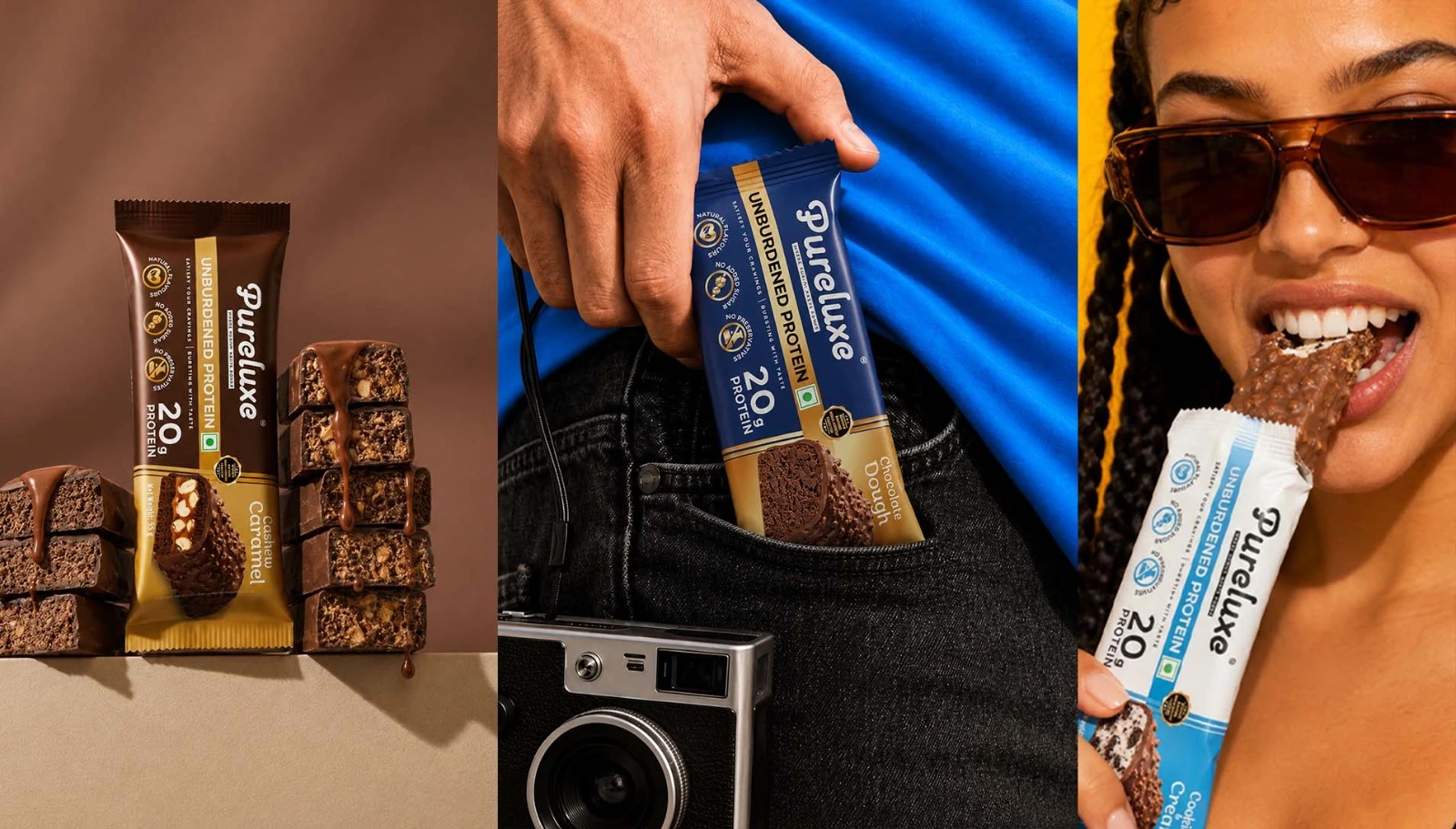
Protein bar with 20g protein and three distinct flavours.
- Caramel & Cashew
- Chocolate Dough
- Cookies & Cream
Most protein bar branding picks a side.
- Gym bars: black, red, loud protein numbers.
- Clean-label bars: pastel, minimal, sterile.
Pureluxe couldn't pick either. It had to look indulgent and still say "20g protein".
Make the product earn its shelf position on taste appeal first. Let the protein number close the sale, not open it.
Brand Identity Direction
Indulgence you don't have to justify.
- No gym aggression.
- No clean-label sterility.
- Closer to how a good chocolate brand presents itself.
- Treat first, functional bar second.
Label Design
- We designed the label to feel like a premium snacking experience, not a traditional health product.
- A buyer should know what they're buying from three feet away. We adopted deeper tones, refined textures and a flavour-led packaging approach.
- 3 different flavours, 3 different colours, 3 different appeals.
- Typography was kept clean and confident, never louder than the flavour visual.
- Protein numbers were instantly visible, but never dominant.
- Every design element was chosen to feel indulgent and boost cravings.
- Overall, we crafted a clean, modern aesthetic packaging design with strong shelf appeal.
Shelf presence across quick commerce and retail. A nod from actor Sunny Singh along the way. Proof that the pack got picked up, not just noticed.
Where the Protein Bar Category Is Actually Headed
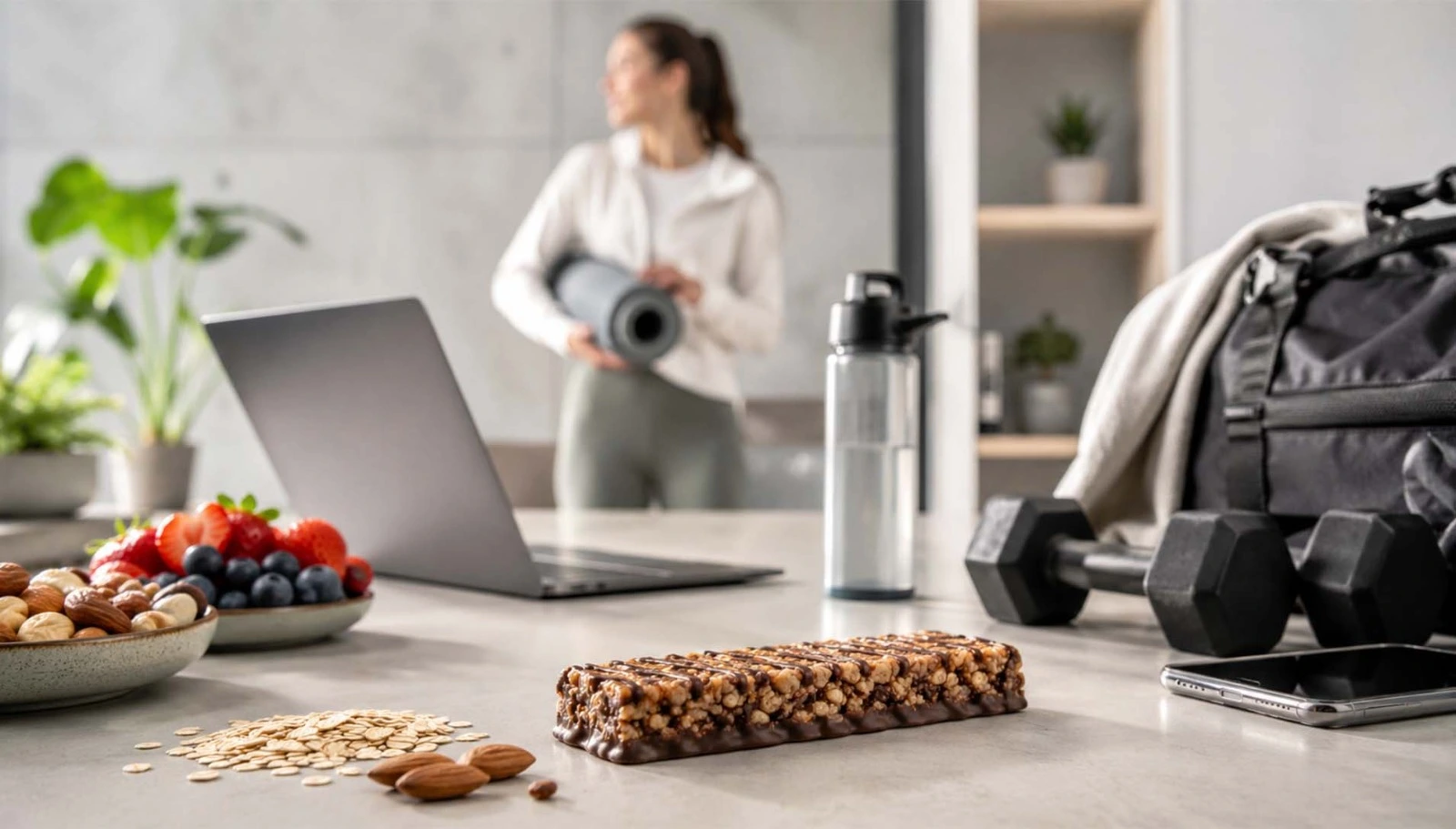
Most of the white space left in Indian protein bars isn't in the "more protein" area. It's in problems nobody has fully solved yet.
- Genuinely gut-friendly protein sources beyond standard whey, for the large chunk of India that's lactose-sensitive.
- Millet and desi-grain-based bars that don't read as a health fad but as familiar, trusted nutrition.
- Honest, uncomplicated pricing that doesn't force buyers to do protein-per-rupee maths themselves.
- Vegan and plant-based protein bar options in India that actually taste like something you'd choose twice, not once out of guilt.
The brands that win the next few years of this category won't just be the ones with the highest protein count. They'll be the ones that pick a lane, whether that's clean label, gut-friendly, budget-value or genuine indulgence, and build every part of the product, including the pack, around it.
Building a Protein Bar Brand of Your Own?
Most F&B founders get the formulation right and then treat branding and packaging design as an afterthought, something to sort out once the product is "ready." That's usually where good products lose to average ones on the shelf. A buyer decides in seconds, and a bar that looks generic, no matter how clean its ingredient list, gets scrolled past.
DN Designs starts from the opposite end. Before a single visual gets made, the brand's actual positioning gets locked: who it's for, what it's really competing against, and why it deserves a spot at that price point. So, eventually, every colour, material and typography choice on the pack is answering a question the buyer is already asking in their head. That's the difference between design that decorates a product and design that argues for it, and it's why a pack built this way earns trust on the shelf instead of just attention.
If you're building or repositioning a protein bar brand, DN Designs can help you on the journey. We can craft your brand strategy, identity and packaging. Additionally, we can help establish your digital presence and chart out your launch strategy, too.
Just give us a call or drop us a message, and we shall respond promptly. Let's build a protein bar brand that easily makes it to the next list of "best protein bars in India."
Ready to Build a Protein Bar Brand People Reach For Twice?
Call us at +91 94160 11100 to achieve success.