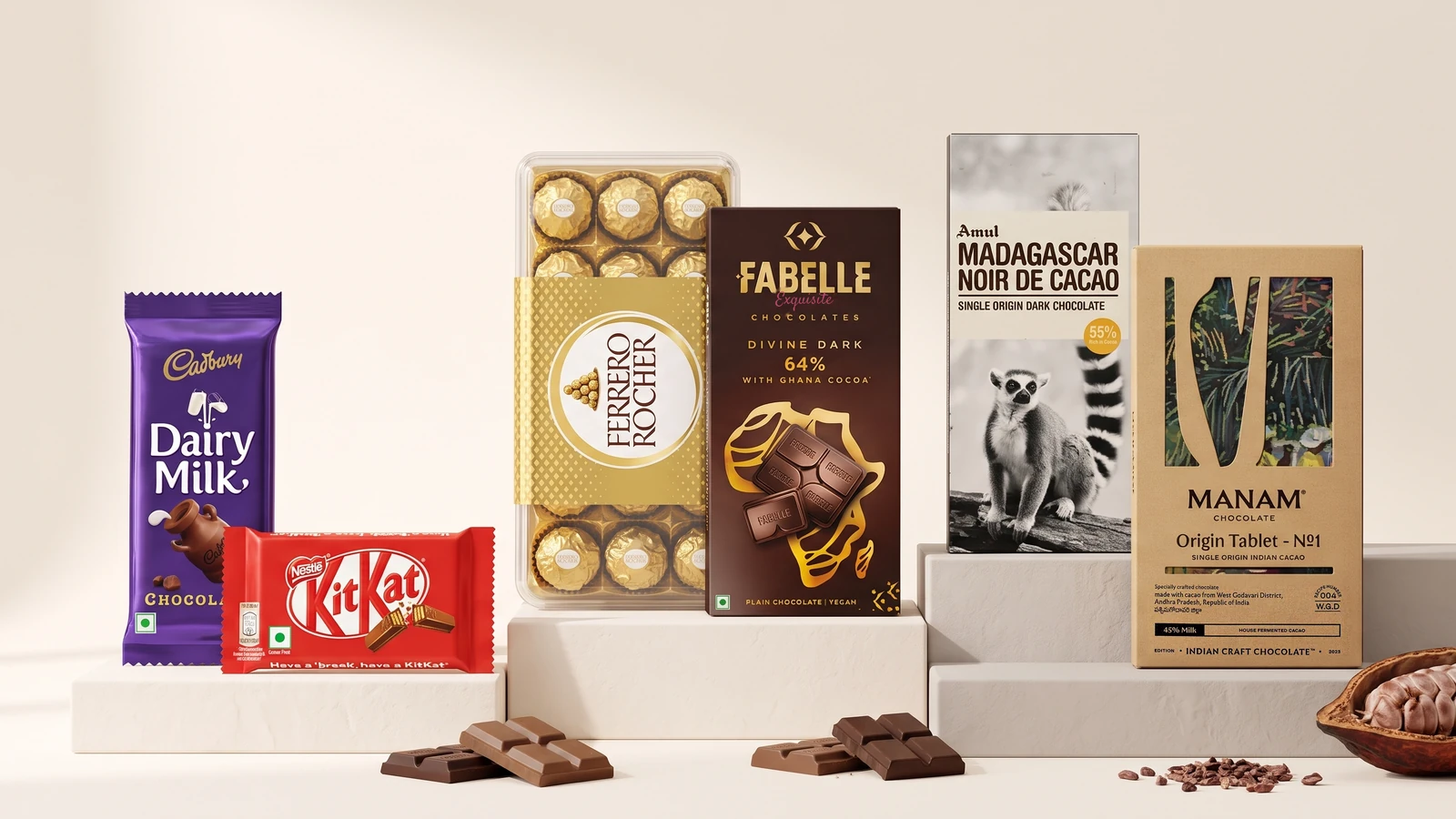
1. Cadbury: The Brand That Taught India to Eat Chocolate
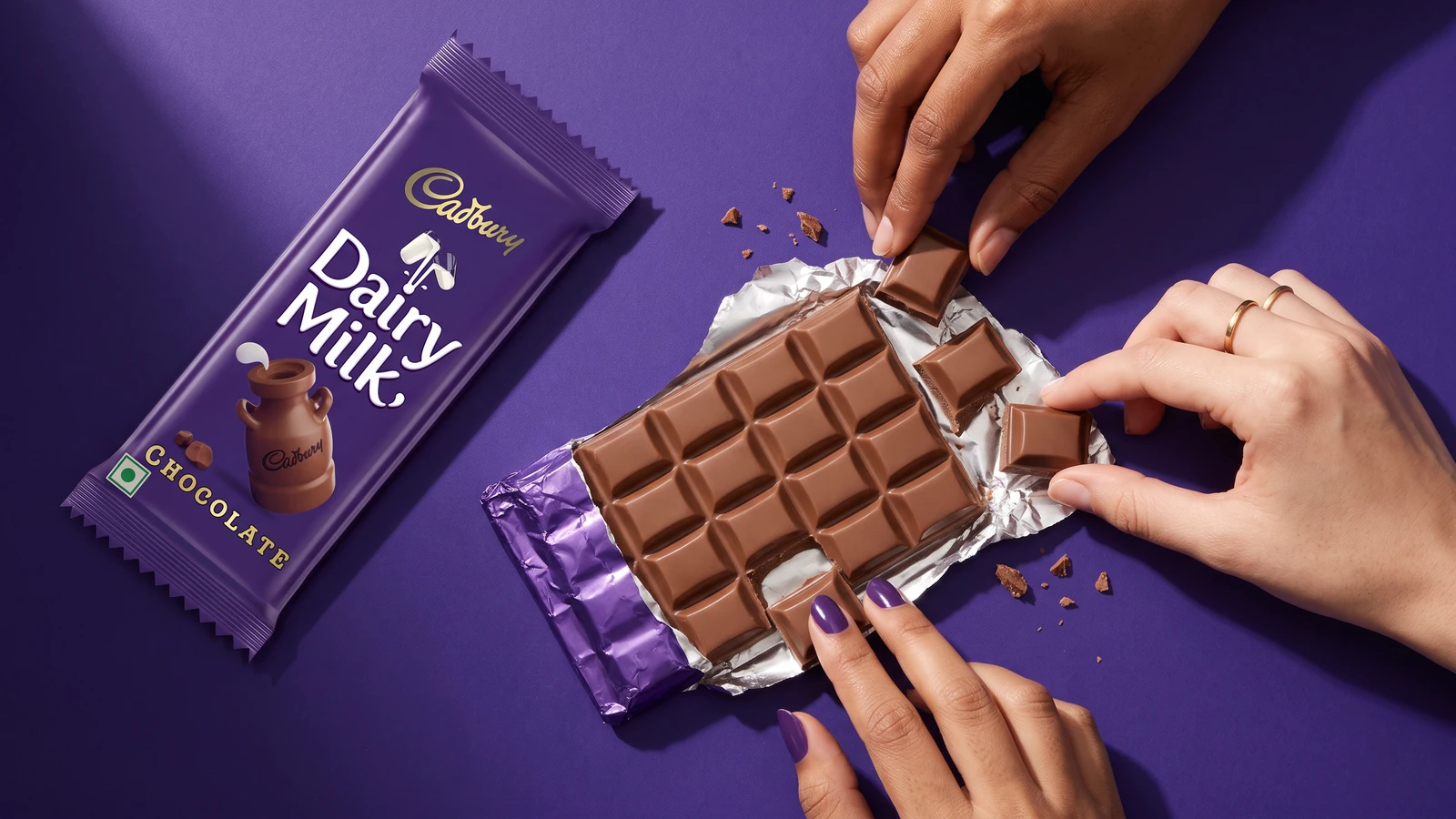
Cadbury started in Birmingham, England, in 1824 and arrived in India in 1948, when Cadbury India (now Mondelez India) launched Dairy Milk. It is still the brand most Indians picture when they hear the word chocolate. Euromonitor figures reported by the Government of India's IndBiz portal put Mondelez India's share of the chocolate market at 64% in 2019, far ahead of everyone else.
- Popular Products: Dairy Milk, Dairy Milk Silk, Fruit & Nut, 5 Star, Perk, Gems, Bournville, Fuse and Celebrations gift boxes.
- Brand Positioning: Mass market for every age, with packs from small single-serves to premium Silk bars. Its long-running "Kuch Meetha Ho Jaaye" idea placed chocolate in moments that once belonged to mithai.
- Brand Identity: Cadbury purple, which the company has fought in court to protect, and a flowing script wordmark based on a Cadbury family signature. A global redesign from 2020 redrew the wordmark and the "glass and a half" milk icon.
- Packaging Design: Purple flow-wrapped bars with appetising chocolate-chunk imagery, family blocks for sharing, and Celebrations boxes for festive gifting.
- What Makes It Stand Out: Nobody else owns a colour this completely. Add a bar at nearly every price point and decades of emotional advertising, and Cadbury is the default choice.
2. Nestlé: KitKat, Munch and the Snack Break
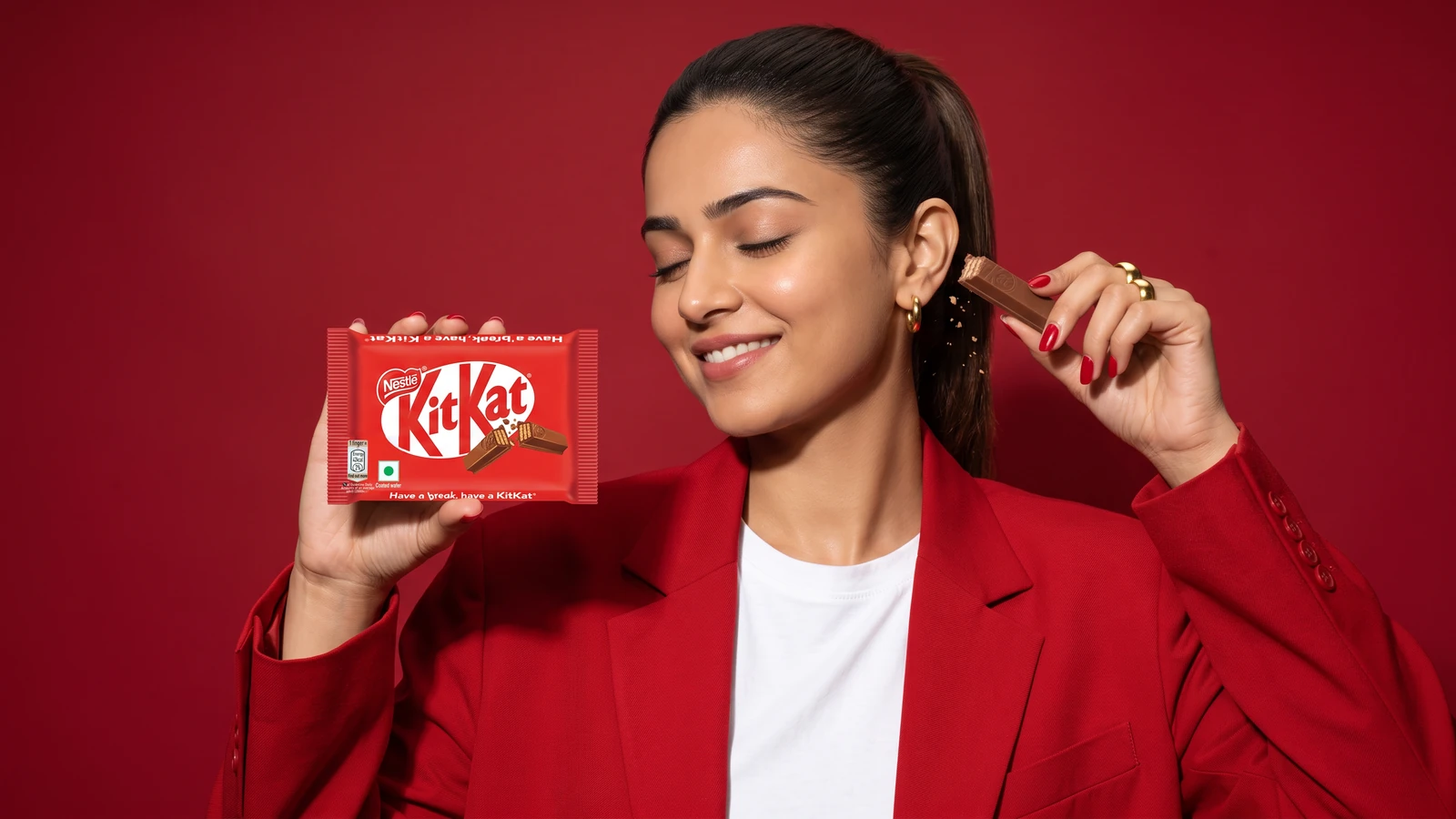
Nestlé is Swiss, but its biggest chocolate brand in India started in York, England. KitKat was created by Rowntree's, which Nestlé bought in 1988, and it reached India in 1995. Today KitKat leads Nestlé India's confectionery growth, with Munch, Milkybar and Bar-One around it.
- Popular Products: KitKat (two-finger, four-finger, chunky and minis), Munch, Milkybar and Bar-One.
- Brand Positioning: A light snack for students and young adults rather than an indulgent treat. Munch competes on crunch and low price, and Milkybar is the brand's white chocolate for children.
- Brand Identity: KitKat's bold red and white and the "Have a Break, Have a KitKat" line, used for decades, are the brand. Advertising in India has played on the same break idea for years.
- Packaging Design: Red flow wraps in low-price packs that reach rural stores, plus festive and limited editions. KitKat India has also run recyclable packs that swap the logo for a recycling symbol.
- What Makes It Stand Out: One idea, the break, carried consistently across product, pack and advertising. Few chocolate brands are this focused.
3. Amul: The Homegrown Leader in Dark Chocolate
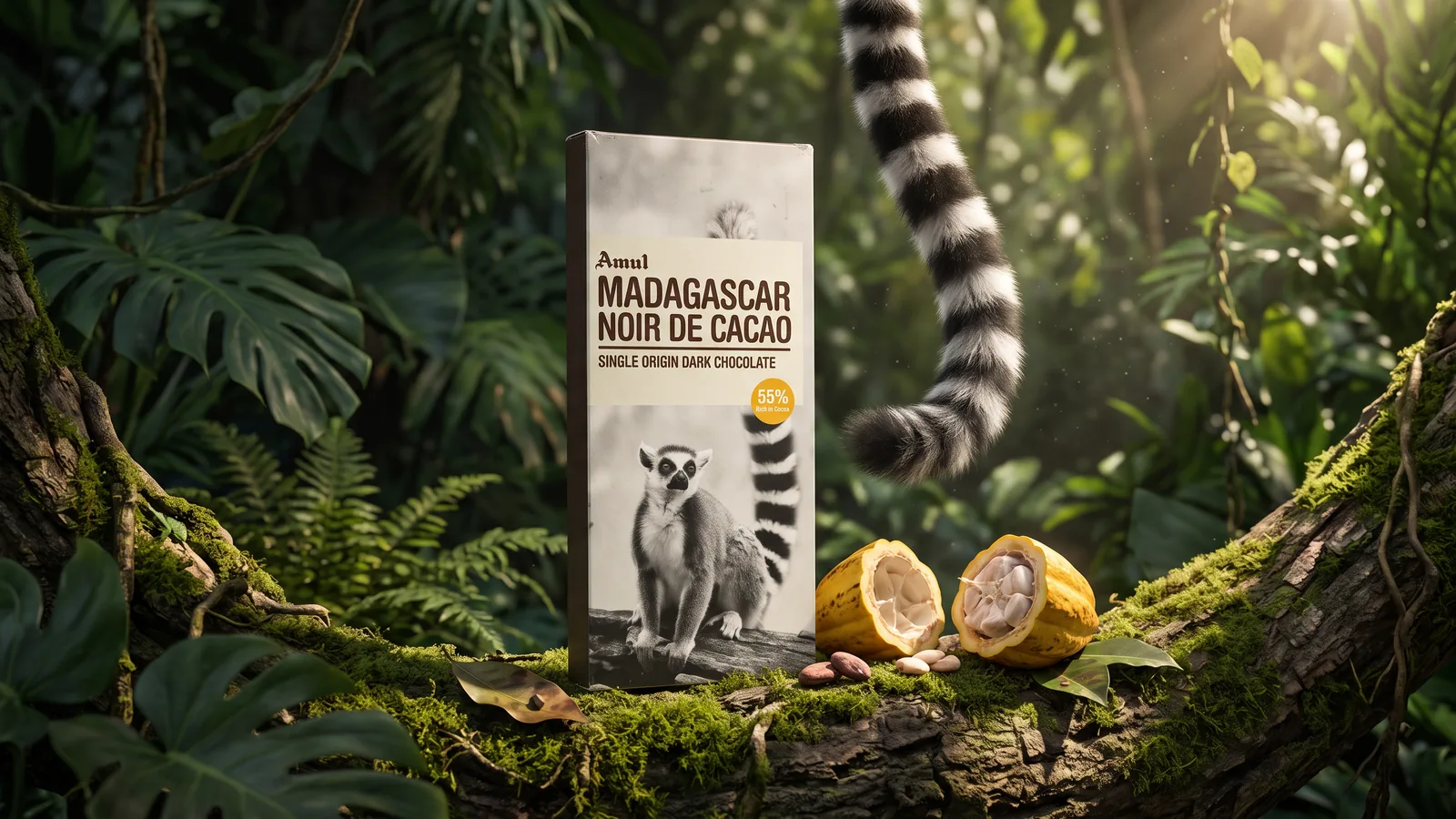
Amul is the brand of the Gujarat Cooperative Milk Marketing Federation, the dairy cooperative based in Anand, and it makes its chocolate at Mogar near Anand. Once known for nostalgic milk bars, Amul has rebuilt its chocolate business around dark chocolate. Its managing director has called it the largest dark chocolate brand in the country, with a range from 55% cocoa to almost 99%.
- Popular Products: Milk and Fruit & Nut bars, dark chocolate from 55% to 99%, sugar-free dark chocolate and a single-origin range including Ecuador, Madagascar, Tanzania, Peru and India.
- Brand Positioning: Mid-priced, trusted and Indian. Amul is the easy first step for people moving from milk to dark chocolate, without the price of an imported tablet.
- Brand Identity: The Amul master brand carries instant trust, while the chocolate range uses a clean, minimal look. The single-origin bars give each country a name and an animal, which adds mystery to plain dark chocolate.
- Packaging Design: The single-origin bars come in paperboard cartons with an embossed animal outline, a black metallised inner wrap and a taste profile chart on the back.
- What Makes It Stand Out: Amul made high-cocoa chocolate mainstream in India, and it uses the back of the pack to teach people what they are tasting.
4. Campco: The Farmer-Owned Chocolate Maker
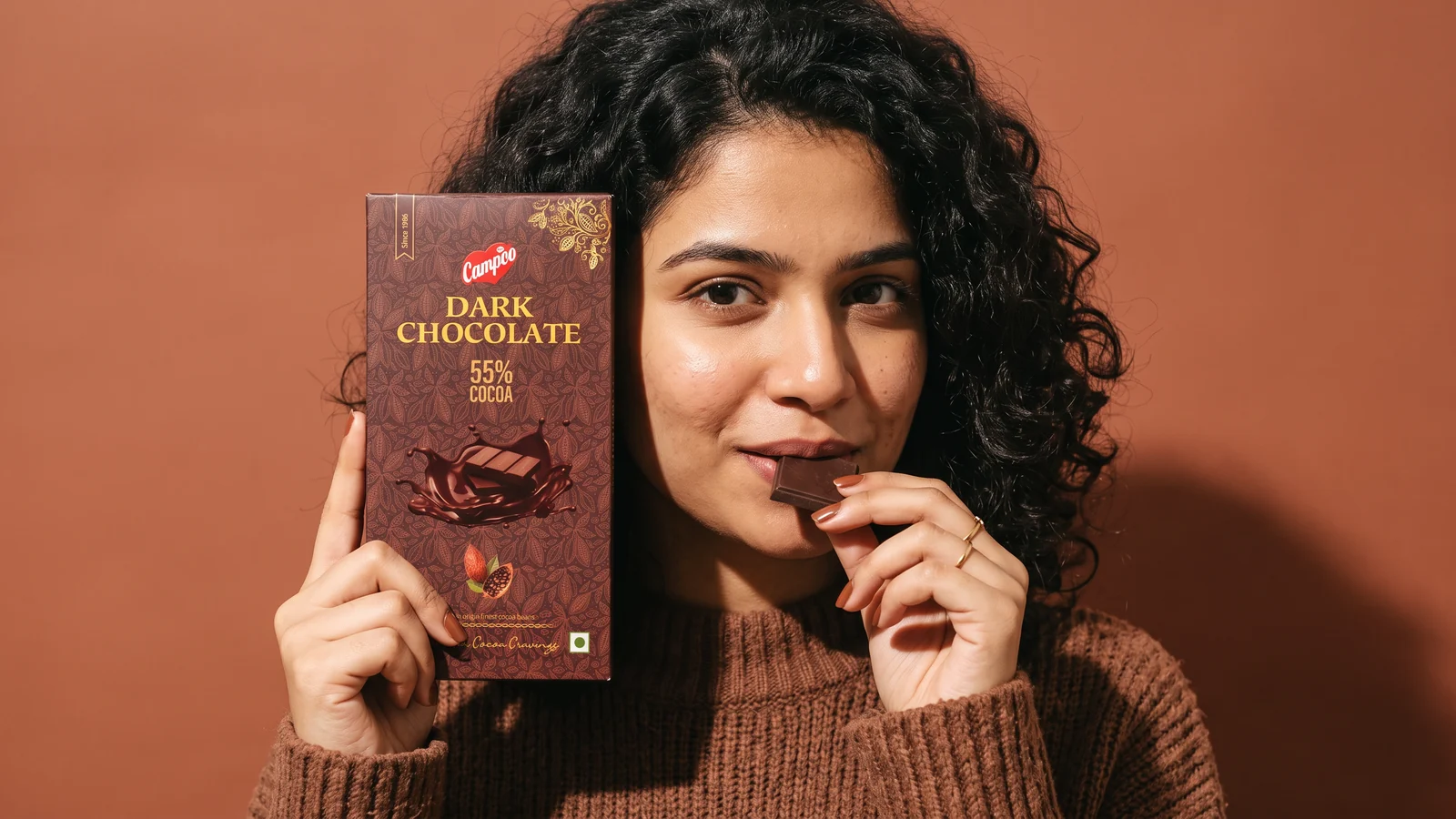
Campco, the Central Arecanut and Cocoa Marketing and Processing Cooperative, was set up in 1973 to protect arecanut and cocoa growers in Karnataka and Kerala. In 1986 it opened a chocolate factory in Puttur, Karnataka, which makes chocolate under the Campco name and for other brands. It is a rare example of a chocolate maker owned by farmers.
- Popular Products: Milk and dark bars such as Melto and Dairy Dream, Krunch, Megabite, Turbo, Krust wafers, eclairs and creamy milk sweets, plus compound chocolate, couverture, cocoa powder and spreads for bakers.
- Brand Positioning: Value chocolate with ₹5 and ₹10 packs for neighbourhood stores, and a business-to-business arm for ice-cream, biscuit and bakery makers.
- Brand Identity: The story is the cooperative itself: chocolate made with homegrown, Indian-origin cocoa by a farmer-owned business.
- Packaging Design: Small flow wraps built for kirana counters, multipack pouches of eclairs and bulk industrial packs.
- What Makes It Stand Out: Campco connects the cocoa farm to the finished bar more directly than any mass brand.
5. Ferrero Rocher: The Gold Standard of Gifting
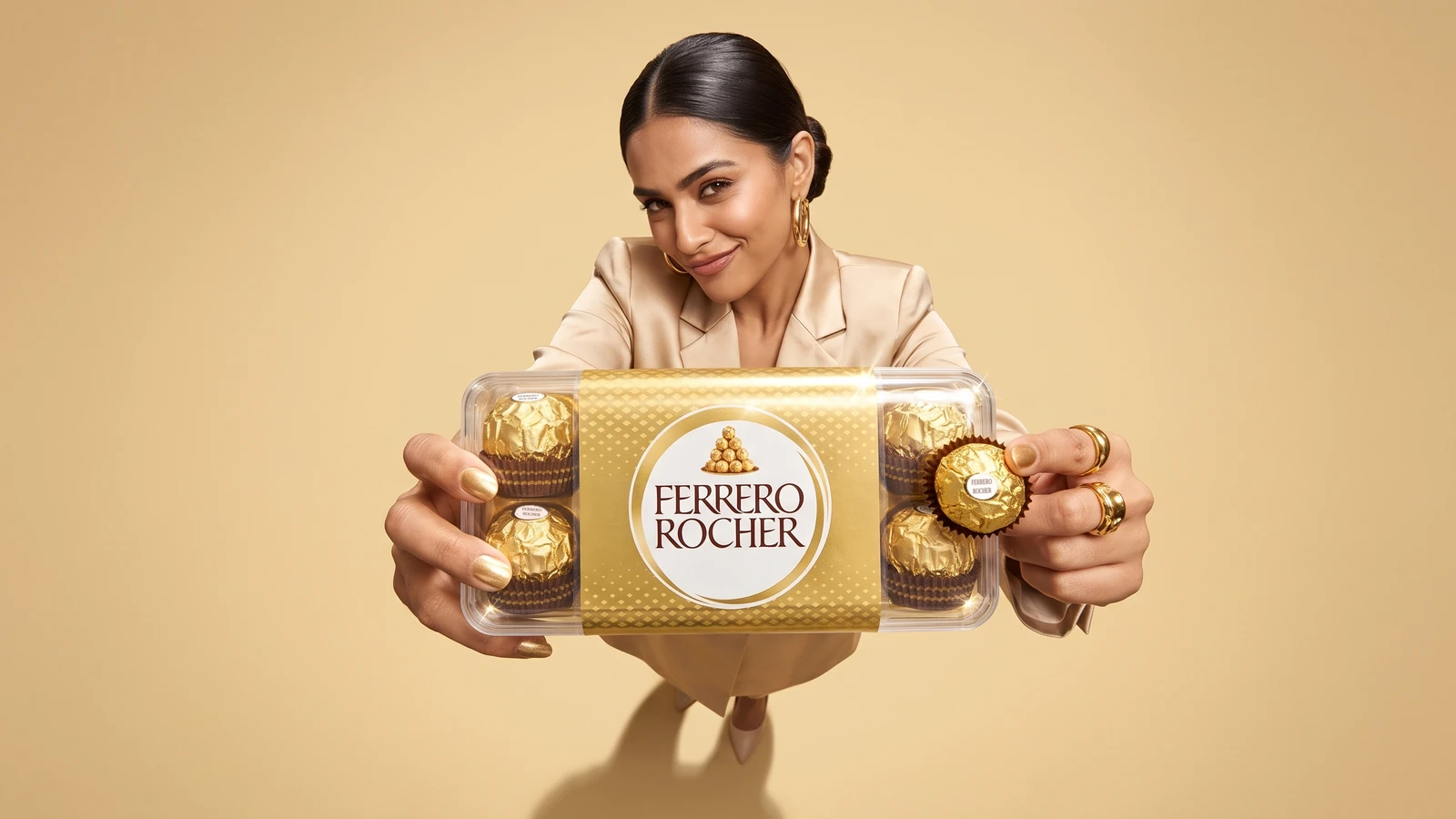
Ferrero Rocher comes from the Italian family company Ferrero, and it reached European shelves in 1982. Ferrero entered India in 2004 and makes products for India and export at its plant in Baramati, Maharashtra. For many Indian households, a box of Ferrero Rocher has become the safe, premium festive gifting option.
- Popular Products: Ferrero Rocher boxes, Ferrero Rocher Moments, Raffaello, Kinder Joy and, from 2026, Ferrero Rocher chocolate bars.
- Brand Positioning: Premium gifting for Diwali, weddings and visits. Rocher Moments covers more affordable gifting and Raffaello is pitched at romantic gifts, so each price point has its own product.
- Brand Identity: A gold, brown and cream palette that reads as celebration, with an oval label on every praline.
- Packaging Design: Each praline sits in gold aluminium foil and a paper cup, inside a clear polypropylene box with a PET tray between layers.
- What Makes It Stand Out: The packaging is the product. Unwrapping the foil is part of the experience, and the clear box turns every pack into its own advertisement.
6. Fabelle: ITC's Indian Luxury Chocolate
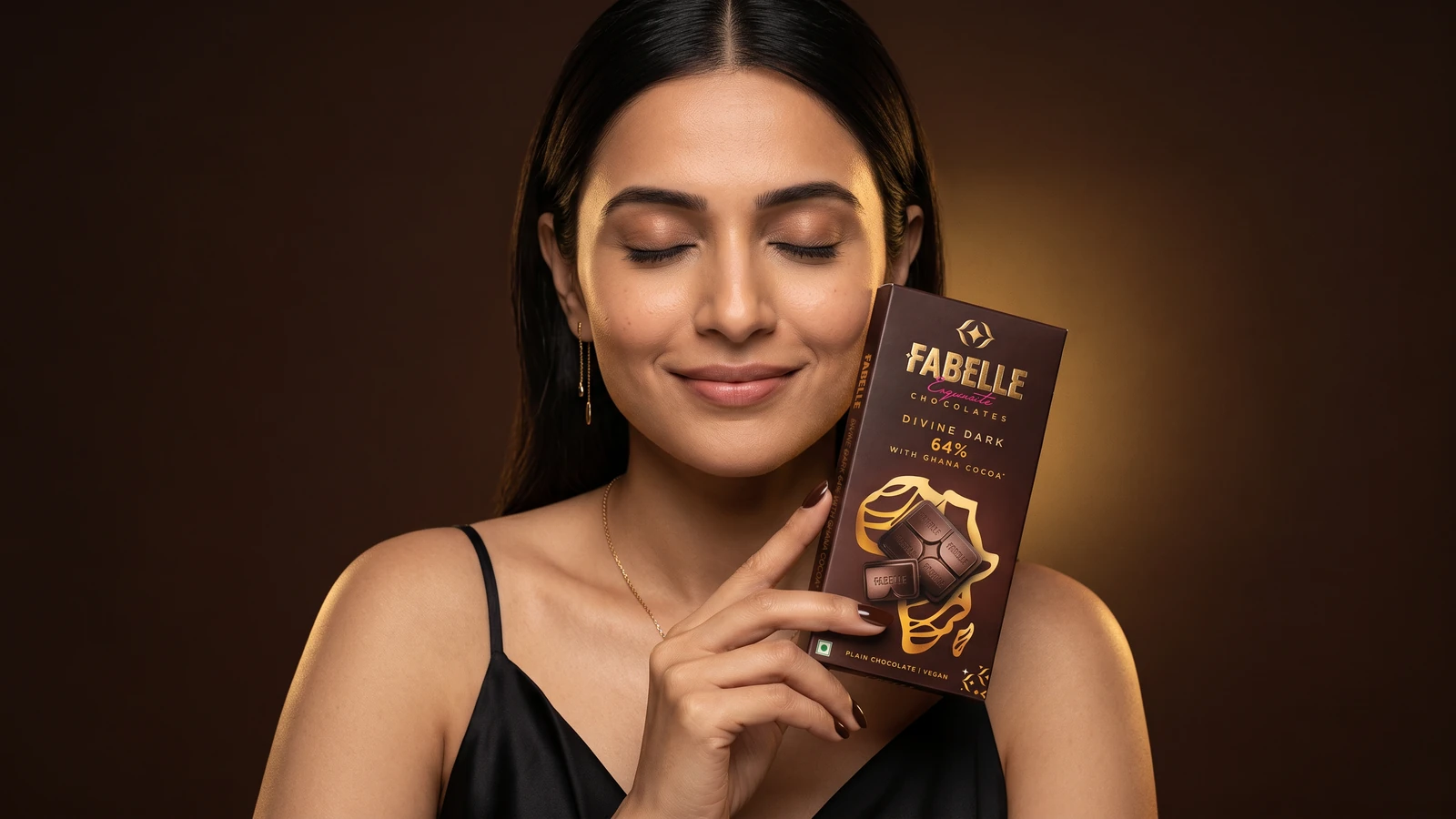
ITC launched Fabelle in 2016 with a chocolate boutique at ITC Gardenia in Bengaluru, and its luxury range is still sold through boutiques in ITC hotels. In 2019 its Trinity Truffles Extraordinaire entered Guinness World Records as the world's most expensive chocolate. Since then, ITC has added Fabelle bars for regular retail.
- Popular Products: Pralines and truffles, themed collections such as Nav-Ras, centre-filled bars and, from 2026, a 64% dark chocolate range.
- Brand Positioning: Luxury for gifting and connoisseurs, with a mass-premium bar range that brings the name into everyday stores.
- Brand Identity: The language of luxury hospitality, built on Indian culture. The Nav-Ras collection pairs nine pralines with music based on the nine rasas, created with ITC Sangeet Research Academy.
- Packaging Design: Rich gift boxes in the boutiques, and retail bars in velvet-finished, tamper-proof cartons that feel more premium than a flow wrap.
- What Makes It Stand Out: Fabelle sells an experience, not just a chocolate: hotel boutiques, chocolatier craft and collections that tell Indian stories.
7. Paul and Mike: Bold Flavours, Farm to Bar
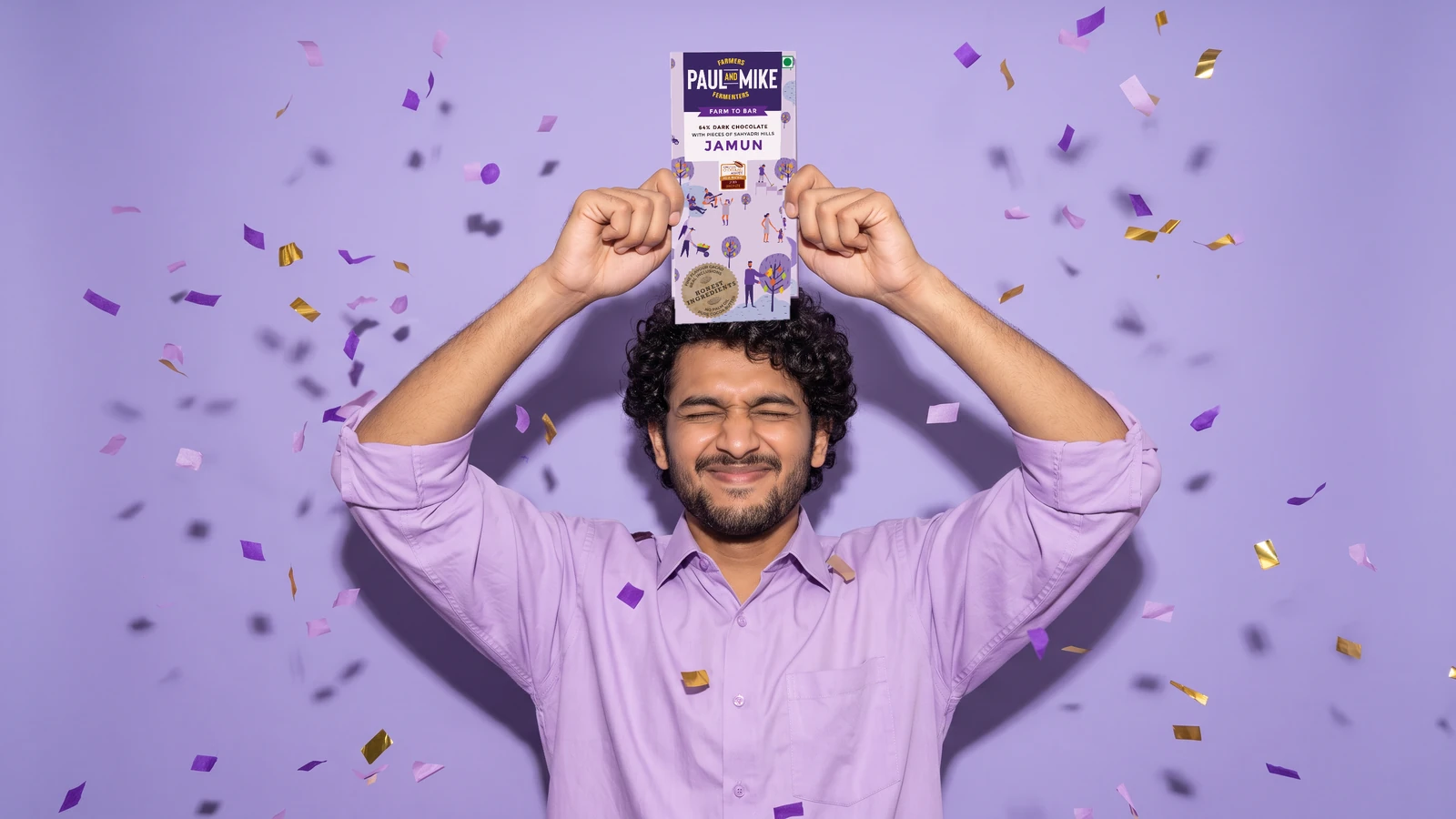
Paul and Mike is a Kochi-based craft brand founded by Vikas Temani and named after two cocoa experts the team learned from. It grows cacao on the outskirts of Kochi and Coimbatore and also buys directly from farmers in West Godavari. Few Indian brands have won as much international attention for Indian cacao.
- Popular Products: Dark bars at 64% to 99% cocoa, flavours such as gin and candied ginger or rum and raisin, a 57% vegan milk masala chai bar and a viral Dubai-style kunafa bar.
- Brand Positioning: Premium craft for curious urban buyers who want new flavours. Its edge is farm-to-bar control combined with inventive Indian and global flavours.
- Brand Identity: Playful and flavour-first, with a name that tells a story about where its cocoa knowledge came from.
- Packaging Design: Flavour-led tablets where the cocoa percentage and flavour are the headline, plus seasonal and gift editions such as Christmas bars.
- What Makes It Stand Out: Its masala chai bar won gold at the International Chocolate Awards Asia Pacific in 2023, and its flavour range keeps it in the news.
8. Manam Chocolate: Indian Cacao as an Experience
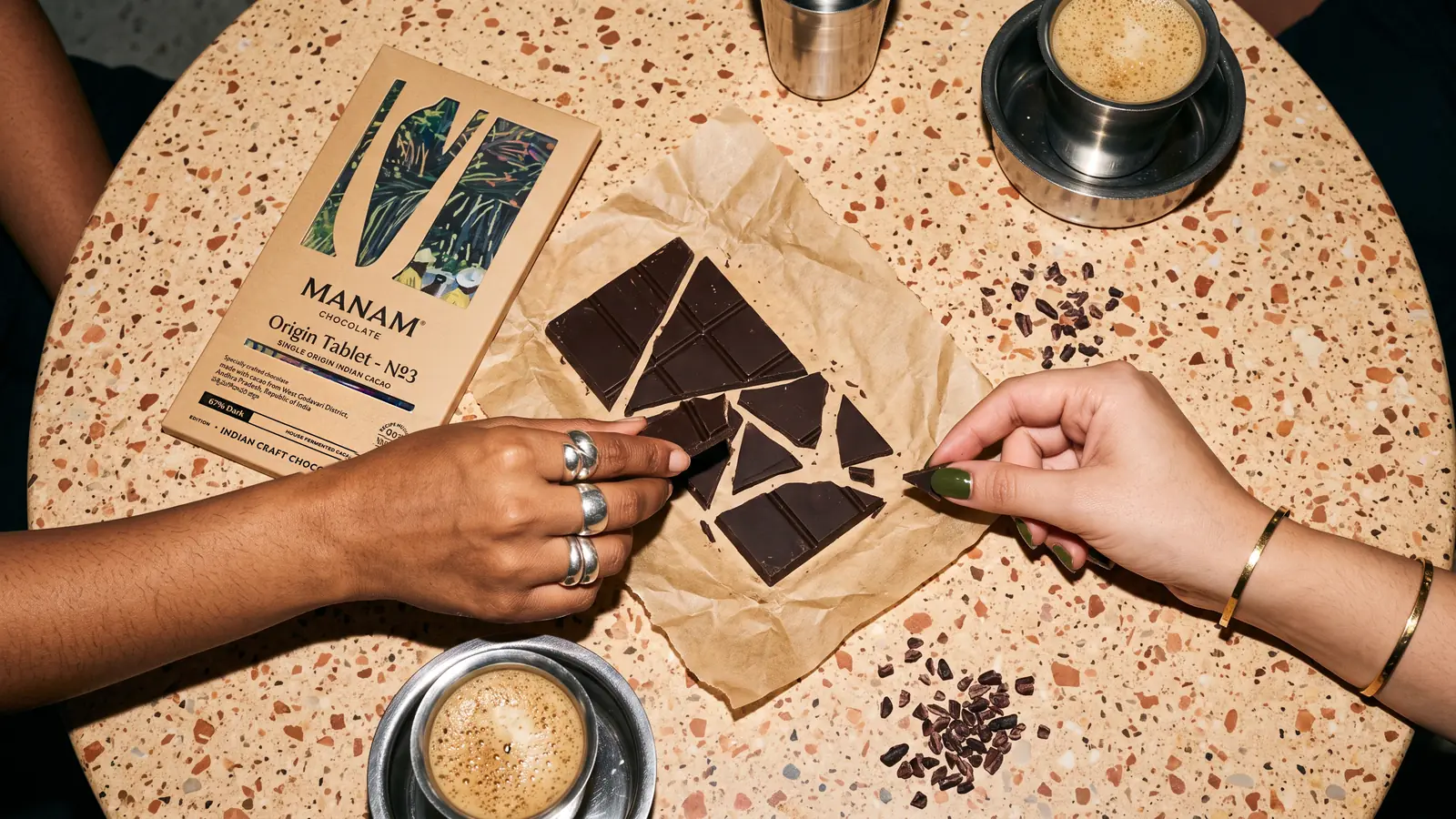
Manam opened its Karkhana, a chocolate workshop, store and cafe, in Hyderabad's Banjara Hills in 2023. Founder Chaitanya Muppala, from the family behind Hyderabad's Almond House, built the Distinct Origins cacao fermentery in West Godavari, Andhra Pradesh, so Manam controls its beans from the farm. TIME named Manam among its World's Greatest Places of 2024, and the brand now has a retail centre in Delhi too.
- Popular Products: Single-origin tablets, bonbons, truffles, barks, spreads, desserts and a make-your-own tablet option.
- Brand Positioning: Premium craft for gifting and discovery, aimed at urban buyers who want a story behind their chocolate. Its edge is traceable Indian cacao and in-house fermentation.
- Brand Identity: Manam means "we" or "us" in Telugu. A distinctive cut-out "M" mark runs from packaging to store signage, and the visuals are illustration-led, with the 2023 edition drawn by artist Namrata Kumar.
- Packaging Design: Illustrated packs and tablets split into pieces of different sizes, with moulds based on shapes found at the fermentery.
- What Makes It Stand Out: Manam treats the store, the pack and the chocolate as one brand world, and that turns a purchase into a visit.
9. Mason & Co: Organic, Vegan and Quietly Pioneering
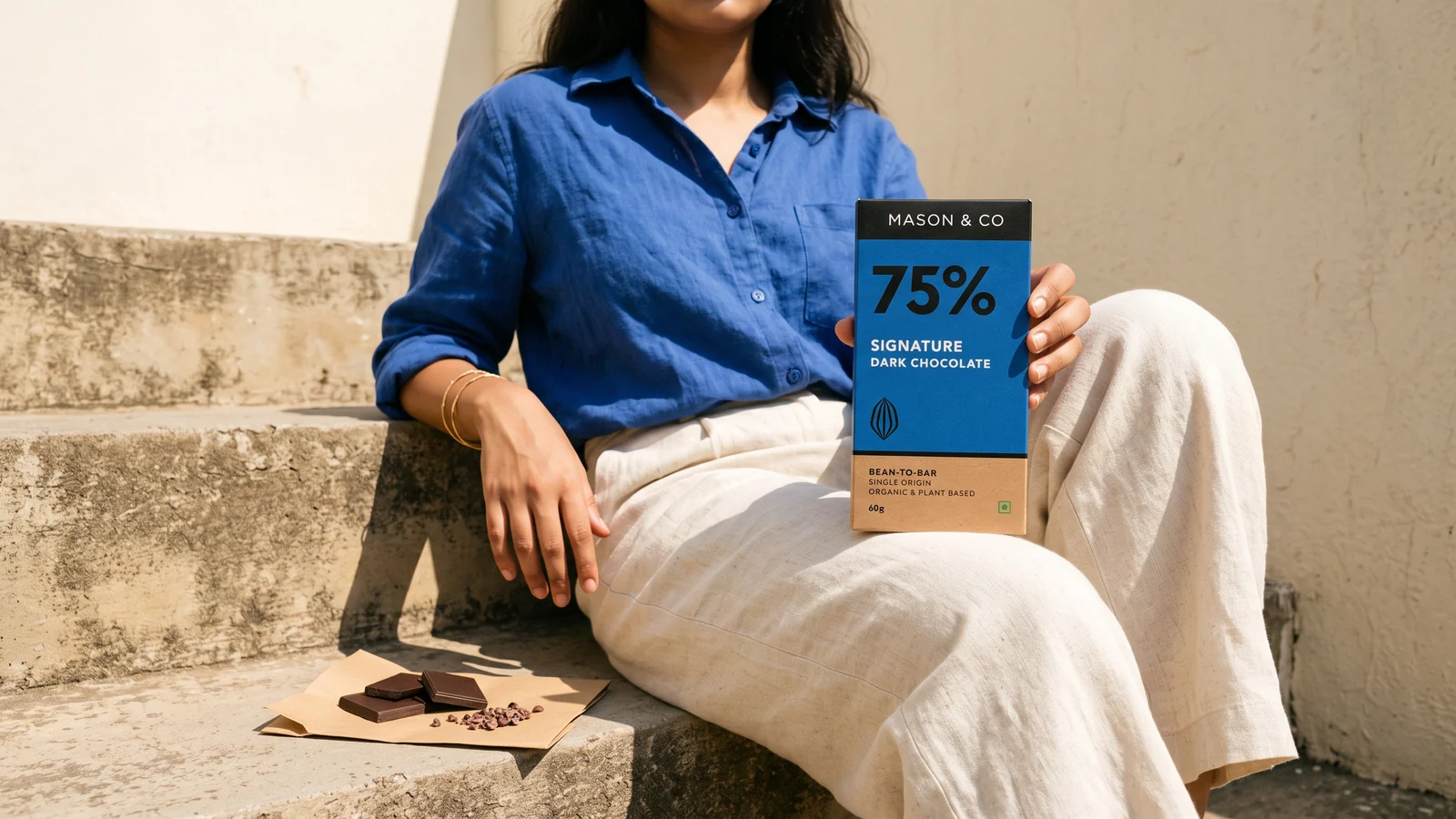
Jane Mason and Fabien Bontems founded Mason & Co in Auroville, near Puducherry, in 2014, making it one of India's earliest bean-to-bar chocolate makers. Bean-to-bar means the maker controls every step from roasting the beans to moulding the bar. Its chocolate is organic, vegan and single-origin, made largely by hand by an all-women team.
- Popular Products: 70% chilli and cinnamon dark, 85% dark, vegan hazelnut dark, and festive flavours such as roasted sesame and coconut masala chai.
- Brand Positioning: Premium craft for vegan, health-conscious and ethical buyers. Its edge is purity: organic cacao, no dairy and minimal processing.
- Brand Identity: Understated and honest, with messaging about purity, sustainability and the women who make the chocolate.
- Packaging Design: Kraft-paper packaging with vibrant, screen-printed designs. Colour variations distinguish flavours, while the handcrafted finish reflects the brand's artisanal approach and commitment to sustainability.
- What Makes It Stand Out: Its process matches its message, down to selling cocoa shells to local farmers as mulch.
10. Pascati: Certified Organic Chocolate From Mumbai
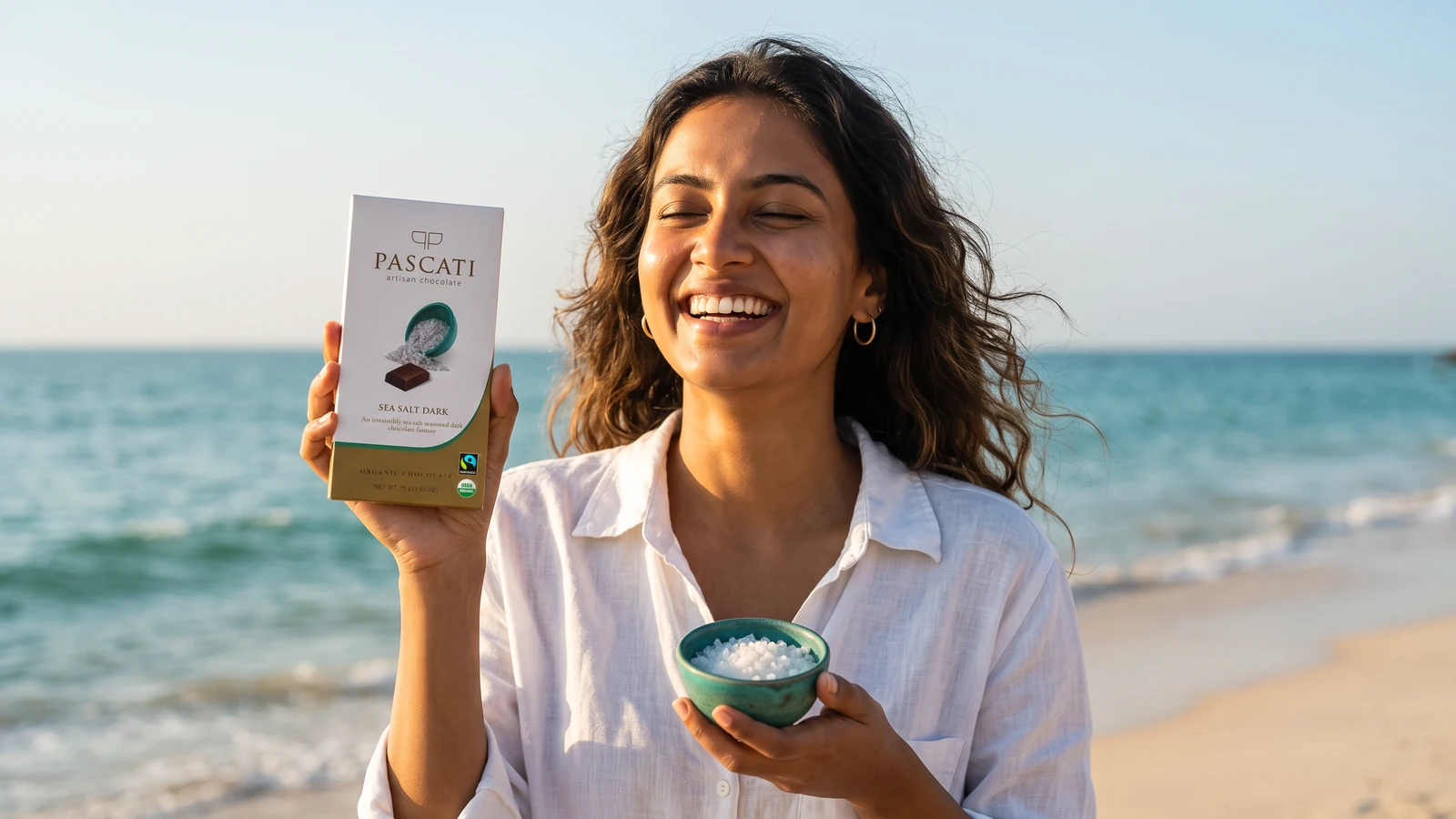
Devansh Ashar founded Pascati in Mumbai in 2015 after moving from hospitality into bean-to-bar chocolate. The brand describes itself as India's first USDA Organic and Fairtrade certified chocolate maker, and it sources organic cocoa from Kerala.
- Popular Products: Organic dark and milk bars in flavours that draw on Indian ingredients, such as cardamom and citrus.
- Brand Positioning: One of the more approachable craft brands, aimed at buyers who care about organic and ethical sourcing but still want familiar flavours.
- Brand Identity: Certification-led, with messaging built around organic, Fairtrade and Indian flavour.
- Packaging Design: Colourful, flavour-led packaging with clear product names and prominent organic and Fairtrade certifications. The design balances a contemporary look with clear communication of the brand's ethical and ingredient credentials.
- What Makes It Stand Out: It was early to certification, and it has worked to explain the difference between pure and compound chocolate to Indian buyers.
Paul and Mike, Manam, Mason & Co and Pascati are part of a growing craft movement that also includes Soklet, Naviluna, Bon Fiction and Subko Cacao. Most sell direct to consumers online and through their own stores, which makes them a useful study in D2C brand building.
11 · At A GlanceTop 10 Chocolate Brands in India Compared
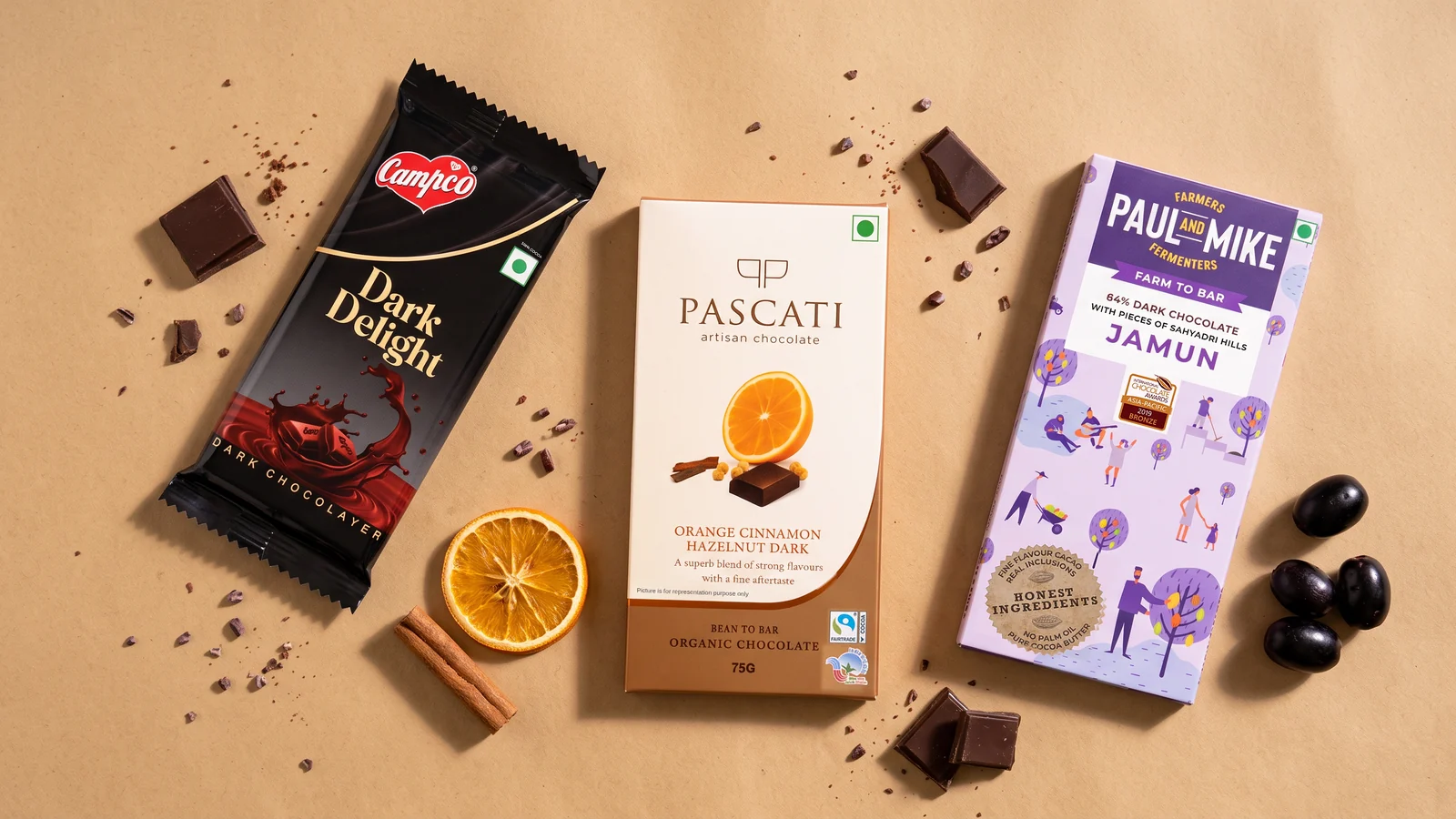
Here is the whole list in one place, with the one brand cue each name owns.
| Brand | Segment | Signature brand cue | Stands out for |
|---|---|---|---|
| Cadbury | Everyday to premium | Purple and the script wordmark | Reach and range |
| Nestlé | Everyday | KitKat red and the "break" | A single, focused idea |
| Amul | Everyday and dark | Origin animals on single-origin cartons | Making dark chocolate mainstream |
| Campco | Value and B2B | Low-price counter packs | Farmer ownership |
| Ferrero Rocher | Premium gifting | Gold foil and the clear box | Packaging as the product |
| Fabelle | Luxury | Hotel boutiques and themed collections | Experience and storytelling |
| Paul and Mike | Craft | Bold flavour names | Awards and flavour innovation |
| Manam Chocolate | Craft | Cut-out "M" and illustrations | A complete brand world |
| Mason & Co | Craft | Bright festive editions | Organic, vegan integrity |
| Pascati | Craft | Organic and Fairtrade credentials | Certified ethical sourcing |
What Makes a Chocolate Brand Stand Out?
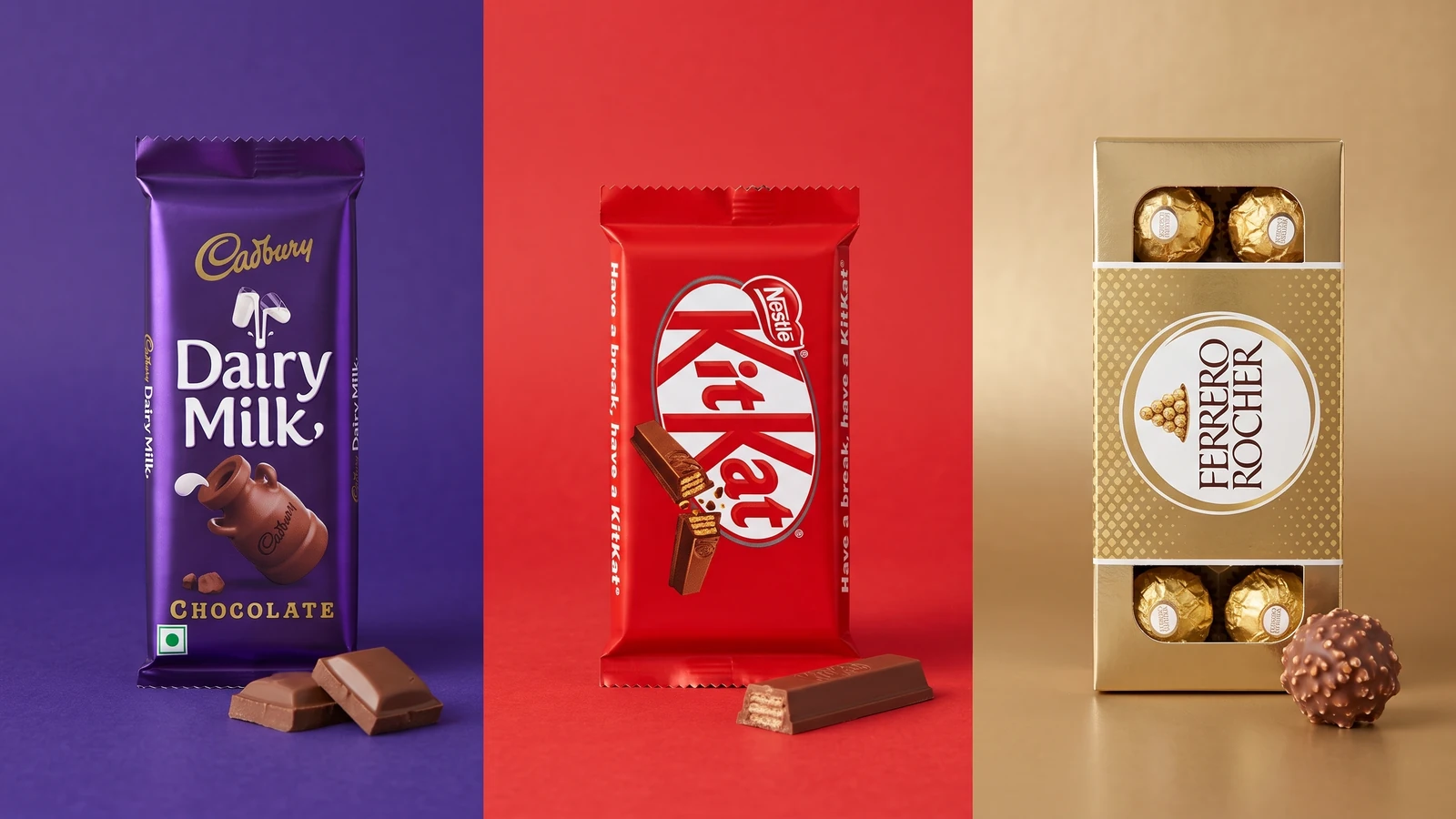
A chocolate brand stands out when people can recognise it instantly, know exactly when to buy it and trust it to taste the same every time.
In practice, that means one owned visual cue, a clear occasion, a range across price points and a believable story, carried the same way on pack, online and in-store.
Taste gets a shopper to buy a second time. Brand identity and packaging get the first purchase, and in chocolate, that first choice is often made in under a second.
These six traits show up again and again across the brands above.
An Owned Cue
Cadbury's purple, KitKat's red and Ferrero Rocher's gold are recognised before the name is read.
A Clear Occasion
KitKat is a break, Ferrero Rocher is a gift and Cadbury is a celebration. Each brand owns a moment, not just a flavour.
A Price Ladder
Single-serve packs, sharing bars and gift boxes under one name let buyers trade up without switching brands.
A Believable Story
Amul's trust, Campco's farmers and Manam's fermentery give people a reason to believe, not just a reason to buy.
Packaging People Remember
Gold foil, origin animals and illustrated wrappers turn the pack into part of the experience.
Consistency Everywhere
The same colours, voice and claims on shelf, on quick-commerce apps and in stores build memory faster.
What Can Emerging Chocolate Brands Learn From Established Players?
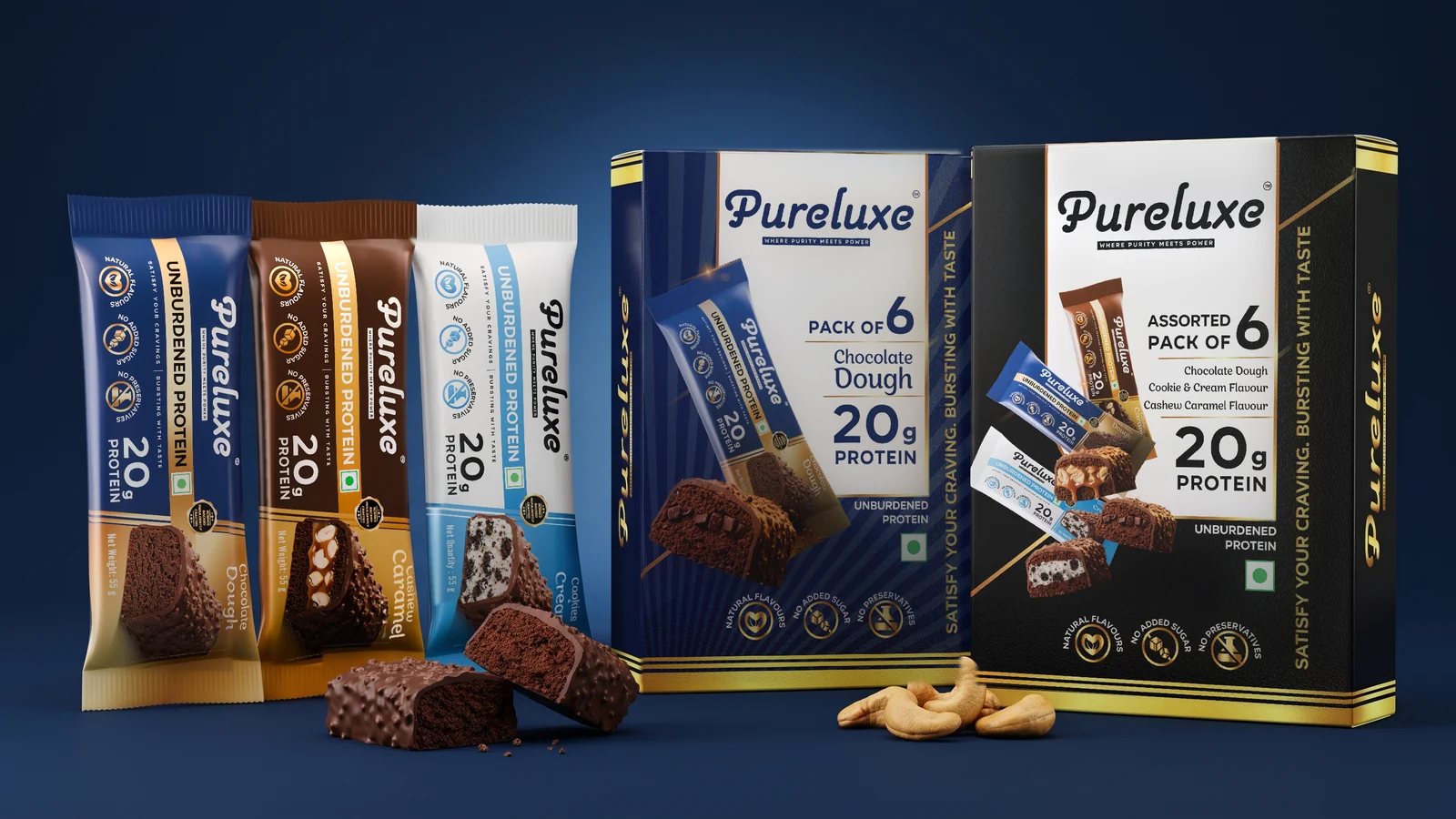
Emerging chocolate brands should pick one segment and one occasion, own a single visual cue, plan a range of pack sizes from day one and make their story visible on the front of the pack. The leaders prove that clarity beats variety, and that packaging decisions are brand decisions.
You do not need Cadbury's budget to borrow Cadbury's discipline. Here is how we would apply the leaders' lessons to a new chocolate or confectionery launch:
- Choose your tier before your flavours. Everyday, premium and craft buyers want different things, and trying to serve all three blurs the brand.
- Own one cue and repeat it everywhere. A colour, a shape or a graphic device, used on every SKU, is how a new brand earns the recognition Cadbury has with purple.
- Plan the pack ladder early. Even if you launch with two SKUs, design the system for single-serve, sharing and gift formats so the range grows without a redesign.
- Separate gifting from everyday. Ferrero keeps Rocher and Rocher Moments distinct, and Fabelle keeps boutique pralines apart from retail bars. Make the difference obvious on pack.
- Put your proof on the front. Cocoa percentage, origin, organic certification or "farmer-owned" should be visible before the shopper turns the pack over.
- Leave room for the back of the pack. The FSSAI chocolate type, any vegetable fat declaration, nutrition panel, allergens and veg mark all need space, so plan it from the first draft.
Every one of these is a packaging design decision as much as a marketing one, and each becomes expensive to change once stock is printed.
14 · Final ThoughtsFinal Thoughts: Clarity Is What Sets India's Top Chocolate Brands Apart
The top 10 chocolate brands in India don't all win the same way. Cadbury wins on reach and a colour it owns, Nestlé on one focused idea, Amul on trust and dark chocolate, and Campco on its farmer roots. Ferrero Rocher and Fabelle turn packaging and experience into luxury. Paul and Mike, Manam, Mason & Co and Pascati show that Indian cacao can carry a premium story.
What they share is clarity. Each knows its tier, owns a moment, repeats one recognisable cue and lets the pack prove its promise. For shoppers, that makes the best chocolate easier to find. For founders, it's the brief: set the positioning first, build the pack system around it and keep it consistent on every shelf and screen.
That's the work we do at DN Designs, a strategy-led branding and packaging design agency in Noida, founded in 2018. The chocolate brands in this list are not our clients, but our approach to a chocolate launch would follow the same steps as our work for Wlue's, a modern snacks brand built around flavoured makhana. We research the category and buyer, set the tier and occasion, and design an identity and pack system that grows from a single bar to gift boxes. Whether you need brand strategy before launch or packaging for a growing range, we handle both together so the brand and the pack tell one story.
Frequently Asked Questions
Which is the No. 1 chocolate brand in India?
Cadbury, made by Mondelez India, is the No. 1 chocolate brand in India by reach and market share. Cadbury Dairy Milk has been sold in India since 1948, and the brand covers almost every price point, from small single-serve packs to Silk bars and Celebrations gift boxes.
What is the most popular chocolate in India?
Cadbury Dairy Milk is the most popular chocolate in India, followed by familiar bars such as Dairy Milk Silk, 5 Star, KitKat and Munch. For dark chocolate, Amul's range is the most widely bought, and Ferrero Rocher is the most common premium gift during festivals.
Which are the best luxury chocolate brands in India?
The best-known luxury chocolate brands in India are ITC's Fabelle and, for premium gifting, Ferrero Rocher. Indian craft makers such as Manam Chocolate, Paul and Mike, Mason & Co and Pascati sit in the same price band and add single-origin Indian cacao. Imported names such as Lindt and Toblerone complete most luxury shortlists.
What are the different types of chocolate in India?
FSSAI's standards recognise ten types: milk, milk covering, plain, plain covering, blended, white, filled, composite, praline and couverture chocolate. On Indian labels, plain chocolate is what brands sell as dark chocolate, while composite chocolate covers bars with fruit, nuts or cereal mixed in.
Which Indian chocolate brand is best for dark chocolate?
Amul is the easiest place to start with dark chocolate in India, with bars from 55% to almost 99% cocoa that are sold widely and priced for everyday eating. For single-origin dark chocolate with more complex flavour, try craft makers such as Paul and Mike, Manam or Mason & Co.
Is Cadbury an Indian brand?
No. Cadbury began in Birmingham, England, in 1824 and is now owned by Mondelez International, a US-based company. Its chocolates are made in India by Mondelez India, formerly Cadbury India, which has operated here since 1948. Amul, Campco and Fabelle are among the major Indian-owned chocolate brands.